
Questionnaire 3: Christina Fisanick


Content warning for domestic violence and filicide.
Name/Pronouns
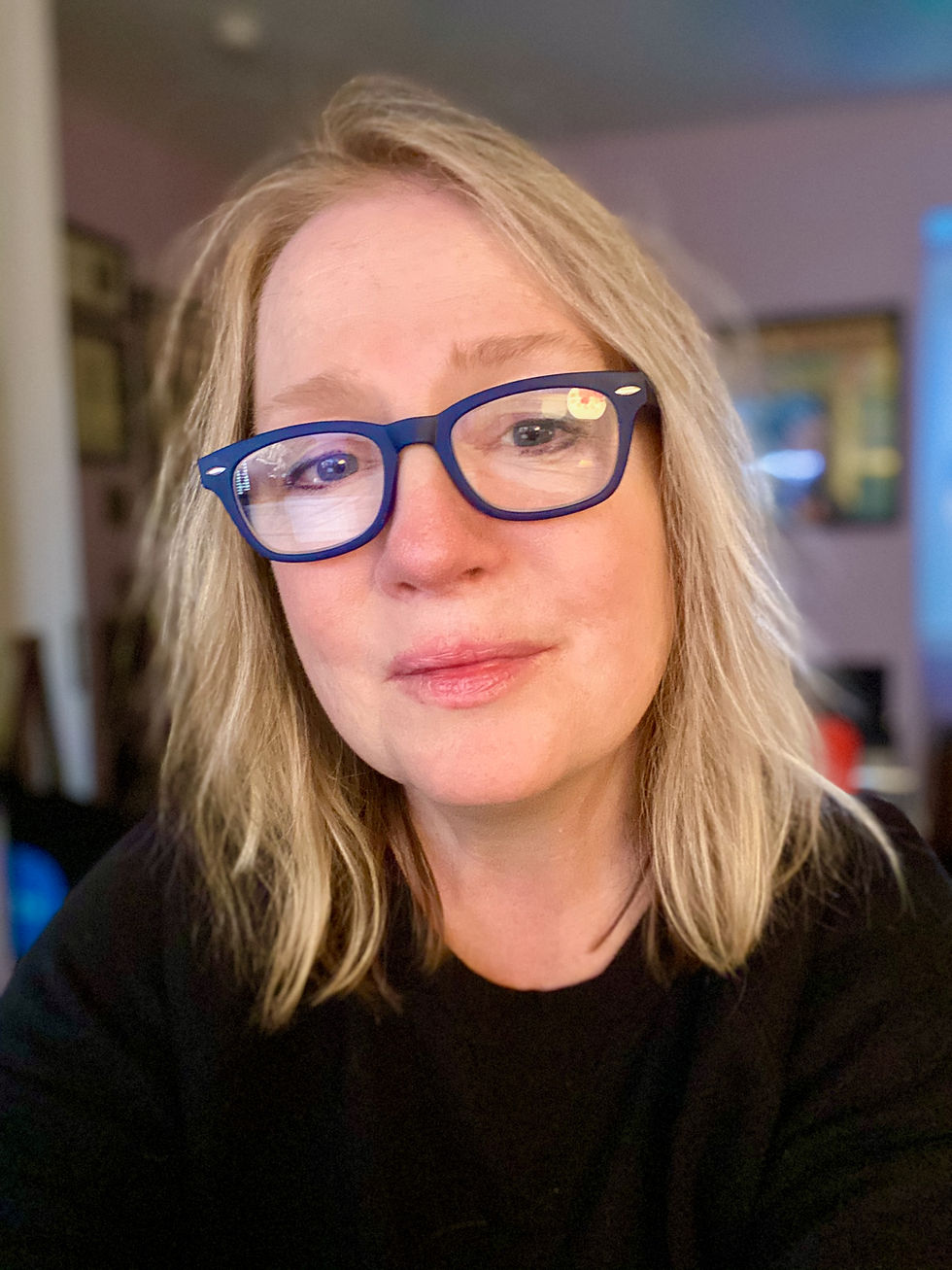
Christina Fisanick (she/her)
What was your experience navigating academia? What factors impacted your journey?
First, I had to get to college. I dropped out of high school in March of my senior year because my parents kicked me out after I became pregnant. When I asked my obstetrician to write a letter for me in support of finishing my senior year through the homebound program, he refused, saying, "You need to go to school and show them what you have done." Meaning, of course, my pregnant belly. I turned to social services for help, and they told me I could either go to a home for unwed mothers or marry my baby's father. I married him. When our daughter was three and a half months old, he murdered her and went to prison. I realized as I waded through the deep grief that followed that the only way I would ever be able to protect myself and any future children I might have was to go to college and have a career.
I enrolled in high school and repeated my senior year rather than pursue a GED. Even though I had been an honors students in the gifted program for most of my academic career, I was not permitted to enroll in those classes when I returned to high school. At some point, my guidance counselor suggested I apply to college. I thought she was joking. The only people I knew who had ever gone to college were my teachers. But, she helped me fill out and submit an application to a local college, and I got in! Thankfully, I was well cared for by my professors. In fact, it was my freshman English professor who encouraged me to major in English (along with my psychology major).
I applied to just five schools and was given a full TAship at one. Along the way I earned an MA in American Literature and a PhD in Composition and Rhetoric.
My struggles in graduate school were always financial. My peers had parents who helped them pay the rent, buy groceries, and pay school fees. I had to take out loans. Loans I am still paying decades later.
In addition, even though I had been a writer since early childhood and had one numerous awards for my writing, it never occurred to me to pursue an MFA because I thought only people with money could afford the luxury of going to graduate school for writing. I had internalized "What are you going to do with that degree? Work in fast food?" In fact, my move away from American Literature to Composition and Rhetoric for my PhD had as much to do with believing I had nothing new to contribute to the field as it did fear of not finding a teaching job in lit.
What advice do you have/what do you wish you knew?
My advice is to believe in your own talents and trust the process of growing as a writer. Even though I took many creative writing classes along the way (at all levels of my education), I didn't find what I think of as my writing voice until I kept a public blog. Knowing people were reading my words every week helped shape how they came together.
Also, I will share some advice given to me by another working class grad school colleague: "It may look like it, but NO ONE is grinding away at their work all the time. No one can sustain endless hours of writing, publishing, and teaching." That has stuck with me all these years, and I recall it in moments when I feel like I am not doing enough writing and publishing. I never wonder if I am doing enough teaching.
Has being a first-gen student had any advantages to your journey and/or your art?
Interestingly enough, my working class/working poor background allowed me (and still does) to understand and apply literary and cultural theory to lived experience in a way that my peers seemed to struggle. Habermas, Butler, Spivak, Freire, Foucault, and others made so much sense to me because they weren't just voices blabbering in the ether of the ivory tower but voices that helped me make sense of the material conditions under which I was struggling.
I know it sounds like a strange combination, but really, hooks, Sedgwick, Faigley, Benjamin, and so many others gave me a language for understanding what I could not put into words because American culture doesn't allow for the poor to have their own voice.
For me, academia became home to me in the way that my family never were nor could be. I was understood in academia, and even if I felt along the way that I didn't always fit in (didn't know the right fork to use at a fancy dinner and so on), academia always felt like a refuge.
Can you share an anecdote of a time when you especially felt your background impacted your experience in academia?
Although I was impacted through my time in academia by not having family I could rely on for financial help nor guidance in understanding how higher ed works, one moment stands out to me prominently. I remember taking a Greyhound bus to a major academic conference where I was presenting my work and going on multiple job interviews. I got off the bus in my comfortable sweatpants (the ride was ten hours) and into a cab that took me to the conference hotel, where a bellman opened my cab door and helped me take my worn out duffle bag from the trunk and into the lobby. It was as if the cab ride had been a portal to the life that lay before me. It would be years before I would be financially comfortable, but for the few days I walked the streets of Chicago, popping in and out of hotels with grand lobbies presenting and interviewing, I had a glimpse of the life I was working so hard to attain.
How would you like to see the creative writing world change?
I wish the creative writing world at large mirrored the Appalachian creative writing world, which is where I spend most of my time and energy. Welcoming all writers who have the desire to be better at their craft makes the writing community itself stronger. In times like these, writers and artists of all kinds are under threat from many forces, and I would love to see a breakdown of some of the hierarchies that seem to have a stranglehold in many writing spaces.
Tell us about your own publications and projects.
I am the author or editor of more than 30 books, all of them non-fiction of one stripe or another. I am currently working on two major projects: 1) an historical fiction novel that takes place in the space after WWII and before the 1950s. It follows the last of three generations of women glass workers in Appalachia, and 2) a third memoir that explores what it is like to grow up in Appalachia as an intellectually gifted girl who felt shunned by both her home community and her school community.
Other writers/artists you'd like to highlight?
Shout out to other working class Appalachian writers, like Wille Carver, Jr., Jody DiPerna, Damian Dressick, and many more.
Bio
Dr. Christina Fisanick teaches writing and literature at Pennsylvania Western University and is an internationally known expert in digital storytelling. A native West Virginian, her creative and scholarly work often explores themes of labor, resilience, and identity in working-class communities. Fisanick is a founding member and current president of the Writers Association of Northern Appalachia (WANA) and the co-host of WANA LIVE!: The Virtual Reading Series. She is the author or editor of more than 30 books, including Pulling the Thread: Untangling Wheeling History (North Meridian 2024) and Digital Storytelling as Public History: A Guidebook for Educators (Routledge 2020). Her shorter works have appeared in Still: The Journal, Archiving Appalachia, Rust Belt Magazine, the Journal of Appalachian Studies, and Pine Mountain Sand & Gravel, among others. Learn more at christinafisanick.com.
Identify as a first-gen (student/and or American) or as a writer exploring class and academic access? Interested in taking the questionnaire? We especially welcome first-gen BIPOC writers to share their perspectives. Contact us on our website for more information.

Comments