
Questionnaire 4: Mai-Linh Hong


Name/pronouns
Mai-Linh Hong (she/her)
What was your experience navigating academia? What factors impacted your journey?
I was always good at school and enjoyed the intellectual part of it. I guess that’s partly why I
never really left school – I’m a professor now, after repeatedly going back and getting more
degrees. But many things about college, grad school, and becoming an academic were
confusing and hard, because of culture, class, and unwritten rules. I went to an elite private
university for college where many students were wealthy and had parents and grandparents
with degrees. I had to learn how to do school on my own (no talking to parents about
exams/papers or job interviews, etc.) and was also trying to fit in with much more privileged
folks, which was stressful and sometimes demoralizing. For example, being around people who had lots of leisure travel experience and could do study abroad and such without worrying about the cost. I grew up in a refugee family, and international travel for fun wasn’t a thing—forced migration was! Also, when it was time for graduate school, I didn’t know that you should look for specific faculty to work with, or visit the school before deciding to go; I didn’t know what questions to ask. I ended up dropping out of my first PhD program in literature, then going to law school (a whole other set of struggles), then going back to do a PhD later at a different university. The time between the two PhD programs was a process of learning many things, including that I hadn’t “failed” the first time (I was doing well academically when I left, but it still felt like failure somehow); there were just many unwritten things I didn’t know, and my first graduate program wasn’t a good fit.
What advice do you have? What do you wish you knew?
Back then, being a “first-gen” college or grad student wasn’t legible as an identity or as a
category of students who might need extra support, so I didn’t know how to articulate my
struggles. It would have been helpful to seek out friends and mentors who had that experience as well. Also, in hindsight, I see I was also affected by undiagnosed neurodivergence, and I wish I had had some tools and supports then that I have now. I didn’t know how to ask for help, or even to see that I could use help—I was so used to things being hard and struggling on my own. So, my advice for others would be to try to see what you could use support with, not blame yourself for it because more likely than not it’s structural, not personal failure. And seek out that support. Look for others who’ve been there and can help point you in the right direction; look for institutional resources. Don’t feel ashamed asking for or using the help that’s available. It’s not something we’re taught to do as kids of immigrants or refugees; we’re taught to be totally self-sufficient, to a ridiculous degree. You have unlearn some of that.
Has being a first-gen student or a student with cultural class boundaries led to any
advantages to your journey and/or your art?
For sure! I think I’m a more empathetic person, and more tolerant of complications and nuance, and that might make my work more interesting. I sometimes write about my family history as Vietnamese refugees, but I would say it’s more that it shapes my ethics and my worldview, rather than that I write directly about trauma or the past. I think there are a lot of readers now, and other writers, who are wondering how to live ethically and with care in a world that is so structurally careless. I think refugees have a lot to teach others about that.
Can you share an anecdote of a time when you especially felt your background impacted
your experience in academia?
As I was finishing my dissertation, there were a number of dissertation awards that people could compete for. Something like that could be valuable for your CV and expose your work to more readers, but I didn’t understand how these awards worked. The announcement would just say nominations are due by a certain date and that self-nominations were possible. So I would just email the email address given and say I’m nominating my dissertation. But I didn’t know that the unwritten process was that you should ask your advisor for someone respected in your field to nominate you, and they should write a whole letter explaining why your work was deserving. Needless to say, I didn’t get any of those awards. I remember seeing a list of nominees for one award that I had self-nominated for; I wasn’t included on the list of nominees and didn’t know why, though I figured I must’ve done something wrong.
How would you like to see creative writing culture change?
The field depends so much on competitive opportunities. I know it’s because we’re all operating within an economy of (false) scarcity, with the arts underfunded and under attack, and I’d like to see that overall situation change. But in the meantime, I would like to see opportunities open up to a greater range of people, and funding/ fellowships/ residencies specifically seek out those with less access. This means not just including a line in your call that says we welcome applications from underrepresented groups. It might mean directly communicating with people/groups who are affected, after doing your research and due diligence about who/what they are and what they need (i.e., ask what they need; don’t assume). Being very explicit in your instructions and criteria; making sure your judges and standards are not biased. There is a creative writing contest, that I won’t name, that is focused on social justice, and every year the winner is a White person. How does that happen? Overall, we need less unspoken gatekeeping, more transparency and support. If you ask for an artist statement, say what it should include and give examples. If there is an open reading period for something, make sure it’s really open, and not just a way for editors to pick folks they met at conferences. Make conferences and workshops more accessible, financially and in terms of disability access. Get rid of recommendation letters.
I want to mention that I come to creative writing without an MFA; my degree are in literary
studies and law. I also attribute this to my first-gen status; I didn’t pursue creative writing as a primary path because it felt too precarious, and I didn’t have encouragement to take that kind of risk. Without formal training in creative writing, I had few mentors or friends in poetry publishing who knew me as a poet (as opposed to in other capacities). So, for me, going the book contest route to get my first book published was probably the best way because of strictly anonymous judging: I didn’t have connections, but I had the manuscript. Open reading periods feel like a black hole because you don’t know how manuscripts are really evaluated. But overall, contests are not a great way to try to get published because by definition so few people can get published that way, and entry fees add up fast.
Your own publications or projects you'd like to share
My debut poetry collection, Continental Drift, is out July 1 from Trio House Press! I share
updates and thoughts about poetry on Instagram @continentaldrift_poems, and folks can also check out links to both my poetry and my scholarly writing on my website,
Other writers/artists you'd like to highlight
A few recent/upcoming debut collections:
Chrysanthemum (Chris) Watkins – The Drag Gospel of Queer Jesus
Yamini Pathak – Her Mouth a Palace of Lamps
Leila Farjami – Daughter of Salt
Mandy Shunnarah – We Had Mansions
Bio
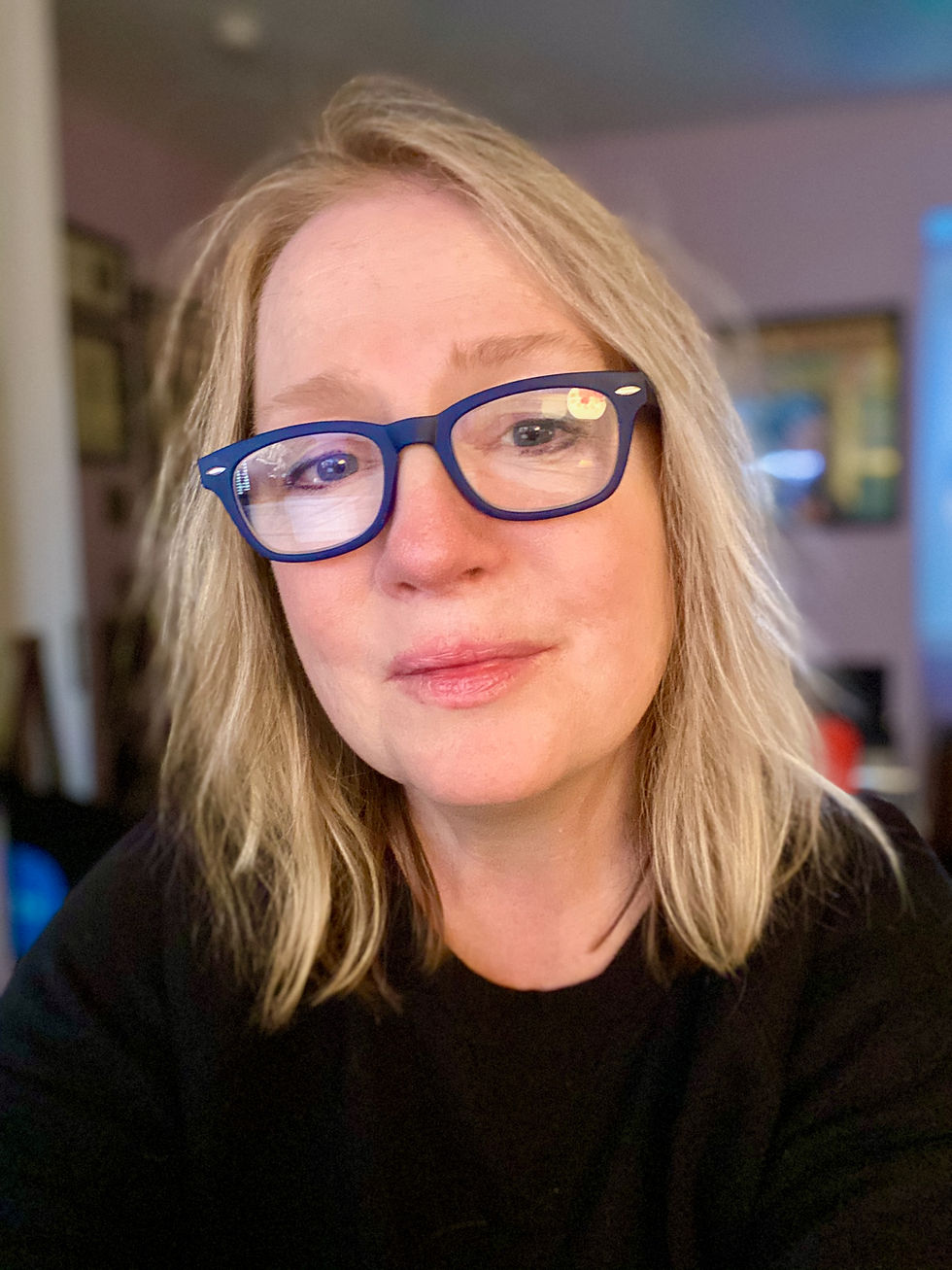
Mai-Linh Hong is a Vietnamese American refugee poet and literary scholar. Her debut
poetry collection, Continental Drift, won the 2025 Trio Award and was published by Trio
House Press in July 2026. Her poems appear or are forthcoming in Waxwing,
Ploughshares, Copper Nickel, Wildness, Beloit Poetry Journal, The Maine Review, and
elsewhere. She also publishes scholarly essays on Asian American and refugee
literature. A lifelong crafter, she is coauthor and coeditor of The Auntie Sewing Squad
Guide to Mask Making, Radical Care, and Racial Justice (University of California Press,
2021). She is an associate professor of literature at the University of California, Merced.

Comments