
Questionnaire 8: Emily Heiden

Updated: Nov 10

Name
Emily Heiden (she/her)
What was your experience navigating academia? What factors impacted your journey?
Growing up, my family wasn't sure I'd be able to attend college. My parents hadn't gone, or rather, my dad had started but dropped out in the fall of his first term, and my mom had gone to nursing school after having three children. She started her community college classes when I was around 10, I think. She got a nursing license and started working nights in the ER. She took classes towards her bachelor's of science in nursing while working full-time and raising us kids. It took her years to finish her BSN, but she did it.
My dad made us dinner while she was at work or taking night classes. My parents knew I wanted to go to college, and they wanted me to as well. My mom would say "You kids aren't living your lives backwards like I did. You're going to college first." They would also say "If we can afford to send you"--not "when"--when the subject of college came up. There was an uncertainty there.
I was in the top 5% of my graduating high school class, but we just weren't informed about the process of applying to schools or taking out loans. I got into Providence College and American University, but ended up going to UConn, which wound up being a great launching pad. Back then it was about $13k a year for in-state tuition, so my parents were able to pay. They told me I could go to Providence but that I would be responsible for making up the difference--not an unreasonable proposition, but I didn't want to take on debt if I didn't have to--and I think deep down I was nervous that I wouldn't fit in at PC. I was told it was a lot of prep school kids.
There was an understandable emphasis on the practical in my family. My mom was a nurse and my dad was a carpenter. So I think there was some nervousness about my English major, because it didn't seem practical. But it was all I had ever wanted to do.
I did wind up getting a Master's in Teaching and along with it a teaching license, so I could teach middle or high school English in public schools, even though I wanted to teach college, because of that emphasis on the practical. But then I taught high school and left after four years, because I wanted to work on my own writing. The pull was too strong.
So I got an MFA. I got full funding, which was great, but it wasn't enough money to cover a decent apartment in the D.C. area. I had my own place for two years, and I paid for it with loans without thinking about the future. Eventually I moved into a shared house with a classmate in an attempt to save some money. That ended up being really challenging for a number of reasons.
After the MFA, I worked at a K-8 school for one year, then I decided to get a PhD. I got funding, but I also took out more loans. I just didn't think about the future. Or I thought about it, but I just decided to leap and believed the net would appear. In many ways, I'm still leaping.
What advice do you have? What do you wish you knew?
In some ways I wish I had just pursued academia from the start, rather than worrying about what was practical and getting that teaching master's, because that one degree alone added 60k of debt to my journey, but at the same time, I'm a better teacher because of some of the things I learned in that master's program, and at the high school where I taught before becoming a professor.
Still, I think my advice would be to abandon what you think is practical and just focus on the thing you truly want to do. Because the professorship came anyway, even with all my worry that it wasn't realistic or that the job market was too competitive.
I sometimes wish I hadn't taken out the loans I did along the way. I have four degrees. My family paid for undergrad, but the two masters degrees and PhD were funded through a mix of stipends and loans. I currently have the equivalent of a mortgage that I am now working to pay back. I am going for Public Service Loan Forgiveness, and thankfully my job is eligible for it, but it does make a real impact on my life to have these loan payments to make (you have to make 120 payments before the remainder of your loans are forgiven).
I think there could have been a way to have taken out less and just scraped by, like some other writers I knew. And that might have been a better way. But other times I feel like Cheryl Strayed, who once wrote "Has [my debt] stopped me from adopting cats who immediately need thousands of dollars in veterinary care...or putting $20 bottles of wine on my credit card or getting bi-annual pedicures? It has not."
That's how I feel about my student loans: I just accepted that they were part of the picture, because I needed them. I did not have a trust fund, like some of my classmates. I did not have a grandmother paying for graduate school, like one of the men I dated.
Has being a first-gen student or a student with cultural class boundaries led to any
advantages to your journey and/or your art?
Coming from the class that I do has made for some colorful characters that have shown up in my writing, like my grandmother and her Cincinnati-speak. Granny was a cleaning lady, and solidly working class. I'm grateful that an essay I wrote about her is coming out this fall. Readers have told me they can hear her voice through her dialogue. She spoke in a distinctive way, and if she had belonged to a different class, her voice would've been so different. I don't think it would have been nearly as captivating on the page.
In terms of my own journey, not having expectations put on me to be a banker or go into finance has meant that I could study English, then get a master's in it, and so on. No one was upset that I wouldn't make beaucoup bucks. I taught at a high school where a lot of the students told me they would study something like French or English or art if they could, but that they were going to study business. I would ask entire classes: "What do you think you'll major in next year at college?" And the room would resound with one word: "Business." Nobody ever pushed me to choose a major like that. The silent dictate was never: "Make money." My parents just wanted me to be able to pay my bills and be happy.
Can you share an anecdote of a time when you especially felt your background impacted
your experience in academia?
It was more of an awareness always at the edges of my experiences. I first felt it in the MFA when two writers I knew mentioned their au pairs and the ritzy suburbs they came from. I felt it when I saw they spent their summers traveling abroad, while I directed coding camps or robotics camps for little kids to make money. I stumbled upon it again in the PhD when I learned that some classmates were able to pay double rent so they could spend months away for writing opportunities and rent Airbnbs without having to abandon their apartments.
In the PhD, I learned that some of my classmates had also lived in Connecticut, my home state--but I became aware quickly that their Connecticut was very different from my Connecticut. They had gone to boarding school; I heard the names of their schools and thought "Isn't that from a movie?" I went to public high school and didn't really know that a truly wealthy Connecticut actually existed. The state is very insular and people really only see the realities in their towns first-hand. My parents had declared bankruptcy and we rented home after home. My dad went into business for himself building houses and it went under. They borrowed my grandmother's car because they couldn't afford to register theirs. My mom worried about which kid to take to the doctor if all three of us said we were feeling sick. She stayed up at night worrying about how to buy food. So this was what I knew.
How would you like to see creative writing culture change?
I want to see people of all races, classes, genders, sexualities, ages, and stages represented in MFAs and PhD programs, and in publishing. I want women and nonbinary people to be published as often as men. And I want people to start to recognize and discuss the ways class operates in terms of who is able to go into creative writing. In many ways, it's really a luxury. Kids from families like mine are not saying "Sure, you can go get a doctorate in poetry"--they're saying are you going to get a teaching license or a nursing license or something tangible so you always have a job. I want more support to exist for first-generation writers. I am not coming to the professorate on equal footing with a lot of my peers from the MFA and the PhD. A lot of them are homeowners now. That's not my reality. My money will be going toward my student loans for at least several more years. I'm 42 years old. I hope to have them paid off by the time I'm 45. Maybe then I can start saving for a house. Imagine if there was awareness of this? Discussion of this? Housing stipends or more scholarships or support, somehow, for those of us who decide to get a terminal degree in creative writing even though no one else in our family has ever dared to dream of becoming a professor or a writer? It could change everything.
Your own publications or projects you'd like to share
Other writers/artists you'd like to highlight
Bayley Gaylin Moore https://www.huffpost.com/entry/red-state-abortion-ban-geriatric-pregnancy_n_672265e7e4b0f3829dfa55ba
Samantha Edmonds https://joylandmagazine.com/fiction/the-bean-and-the-boneyard/
Ashley Anderson https://www.past-ten.com/single-post/ashleyanderson
Bio
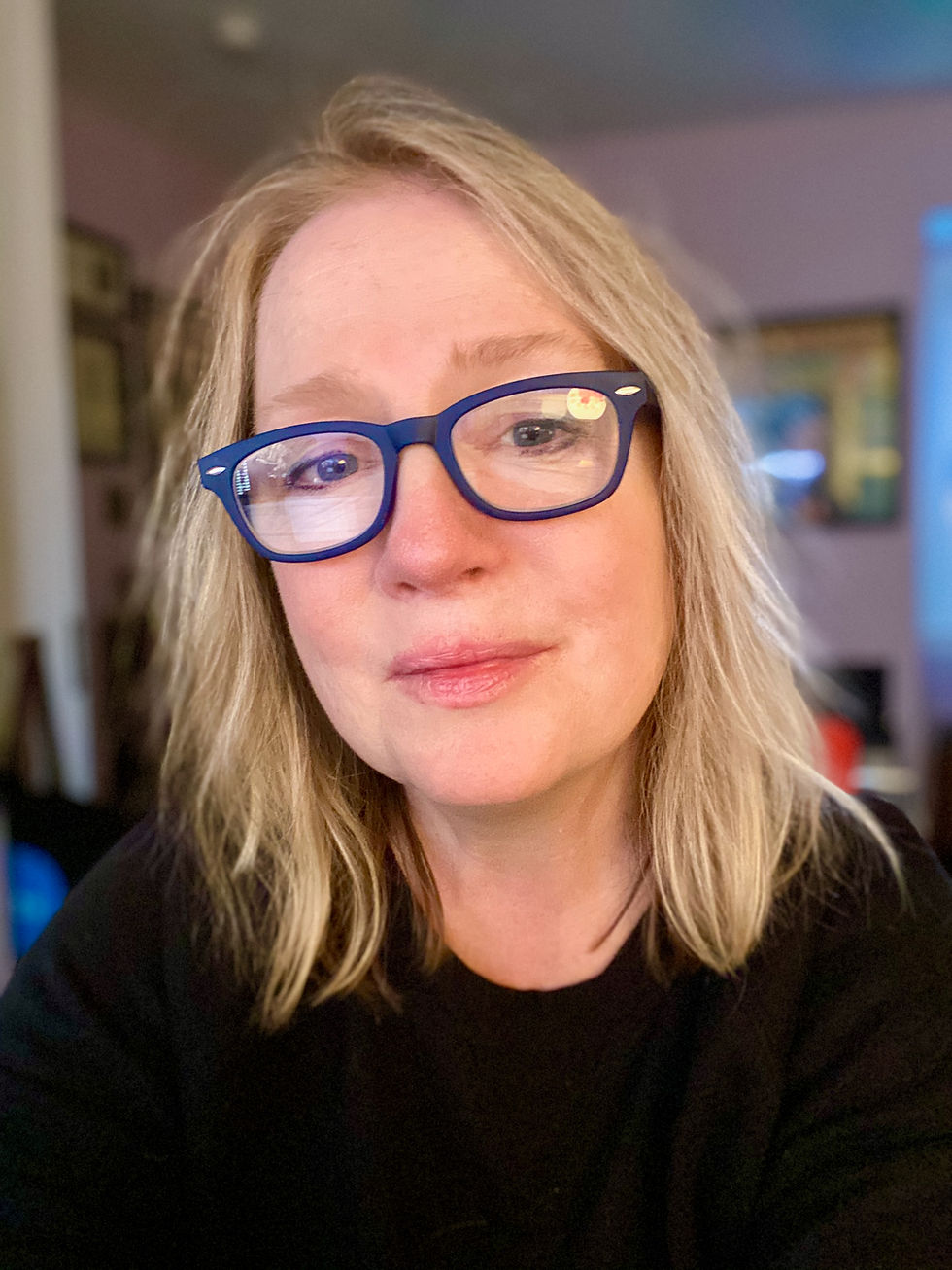
Emily Heiden's writing has appeared or is forthcoming in The Cincinnati Review, The Washington Post, Literary Hub, Electric Literature, Brevity Magazine, Colorado Review, Santa Fe Writers Project, The Jewish Book Council, The Seattle Times, The Hartford Courant, and elsewhere. She has also been published in four anthologies: Fast Funny Women (2021), Fast Fallen Women (2023), and Fast Famous Women (2025), all from Woodhall Press, and Don't Look Now: Things We Wish We Hadn't Seen, from Ohio State University Press (2020). An Assistant Professor of English at Westminster College, she lives in Missouri, where she is at work on a memoir.

Comments